January is a slower week when it comes to tech news, but I go away for a week and there’s drama in “the Linux community.” This week is going to be something different from the usual for me–I’m going to dissect the news. One thing that always grinds the gears of “Linux users” online is anything involving the Linux Foundation.
I’m going to break down a recent story of the Linux Foundation, because there’s always a ton of negative sentiment from random people online and I want to properly evaluate it and see if the concern or ideas for change are valid and why the Linux Foundation makes the decisions they do.
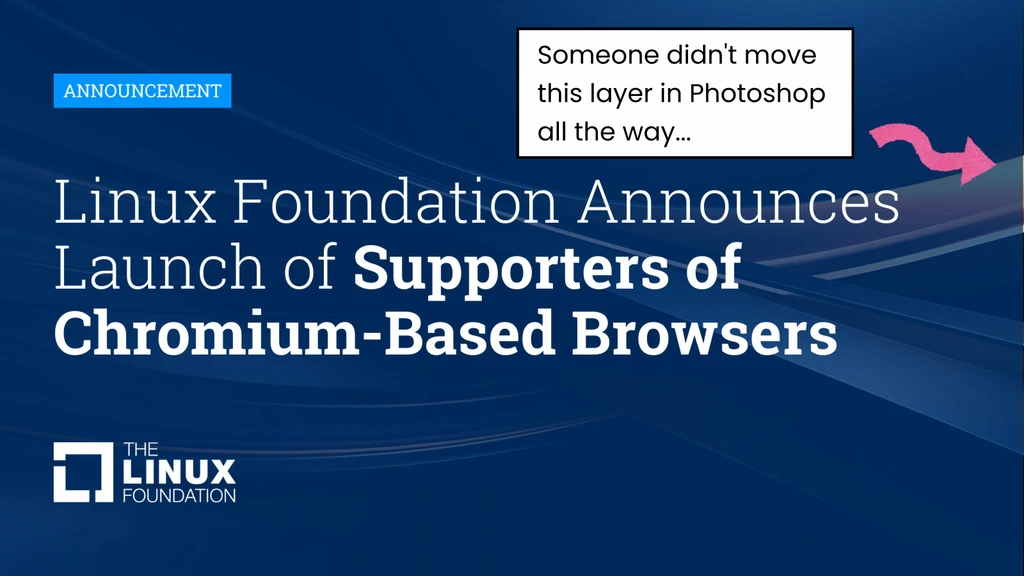
Linux Foundation Announces the Launch of Supporters of Chromium-Based Browsers

A couple days ago, the Linux Foundation, who are the stewards of various projects in the open source world, made the announcement of the Supporters of Chromium-Based Browsers initiative. The initiative promises to raise funding and development support for other projects that use Chromium.
There’s quite a bit to unpack here, but I think it’s important when we read about issues like these, we don’t let our opinions be shaped by what a journalist or content creator said online, we want to look at the source material and come to our own conclusions like educated adults. Online communities of “Linux people” who are generally not involved in these projects reacted very negatively, but I want to break this down.
Reading the Rulings

Let’s dive into the Google anti-trust ruling. Here in the United States, Google has been under a lot of pressure from regulators and now is officially a convicted monopoly. The question is what is the remediation to rectify their damage? Enter United States of America et al., v. Google, which breaks down the final judgment the court made in November 2024.
The remedy must prevent Google from frustrating or circumventing the Court’s Final Judgment by manipulating the development and deployment of new technologies like query-based AI solutions that provide the most likely long-term path for a new generation of search competitors, who will depend on the absence of anticompetitive constraints to evolve into full-fledged competitors and competitive threats
Key to the arguments of the federal government cite the Microsoft anti-trust cases (everywhere where Microsoft is in parens) and the solutions devised by the federal government is Google must divest their ownership in Google Chrome and Android.
Google’s ownership and control of Chrome and Android—key methods for the distribution of search engines to consumers—poses a significant challenge to effectuate a remedy that aims to “unfetter [these] market[s] from anticompetitive conduct” and “ensure that there remain no practices likely to result in monopolization in the future.
The Current State of Chromium
 Whether this will come to pass is another thing entirely and
commentators say that the incoming Trump presidency will need to see it
through or not. Regardless, the threat of Google not being able to own
an open source project might also come bundled with clauses that prevent
the company and its developers from working on it anymore.
Whether this will come to pass is another thing entirely and
commentators say that the incoming Trump presidency will need to see it
through or not. Regardless, the threat of Google not being able to own
an open source project might also come bundled with clauses that prevent
the company and its developers from working on it anymore.
Chromium is used by so many projects everything from all the browsers based on it, Electron-based applications like VS Code and Discord, the Chromium Embedded Framework (CEF) that’s in many applications (Steam, OBS, etc) and video game launchers (League of Legends, Warframe, etc). The short of it: Chromium is popular and lots of projects use it.
This is a bit of a worst-case scenario, but that’s the reality and in its current state, Chromium could not survive in a post-Google world. Google knows this too. By their own disclosure, Google represents 94% of all contributions to Chromium.
By getting the Linux Foundation involved Google and the open source world benefit because it means there’s more non-Google voices helping develop Chromium and this scenario where the world is stuck with an undeveloped Chromium never comes.
The Role of the Linux Foundation

Despite the name, the Linux Foundation is not just about Linux, nor should they feel obligated to give anything out of the interest of its members. Google happens to be a paying member of the Linux Foundation and while they have not donated the Chromium trademark, having a framework like the Supporters of Chromium-Based Browsers is great for future proofing the project.
Read this blog post about the Linux Foundation’s mission statement.
This also brings up the mission and goals of the Linux Foundation. A lot of people online would have you believe the goal of the Linux Foundation is to raise money for the Linux desktop, but this isn’t true when we consider two major parts: mission statement and financial responsibility.
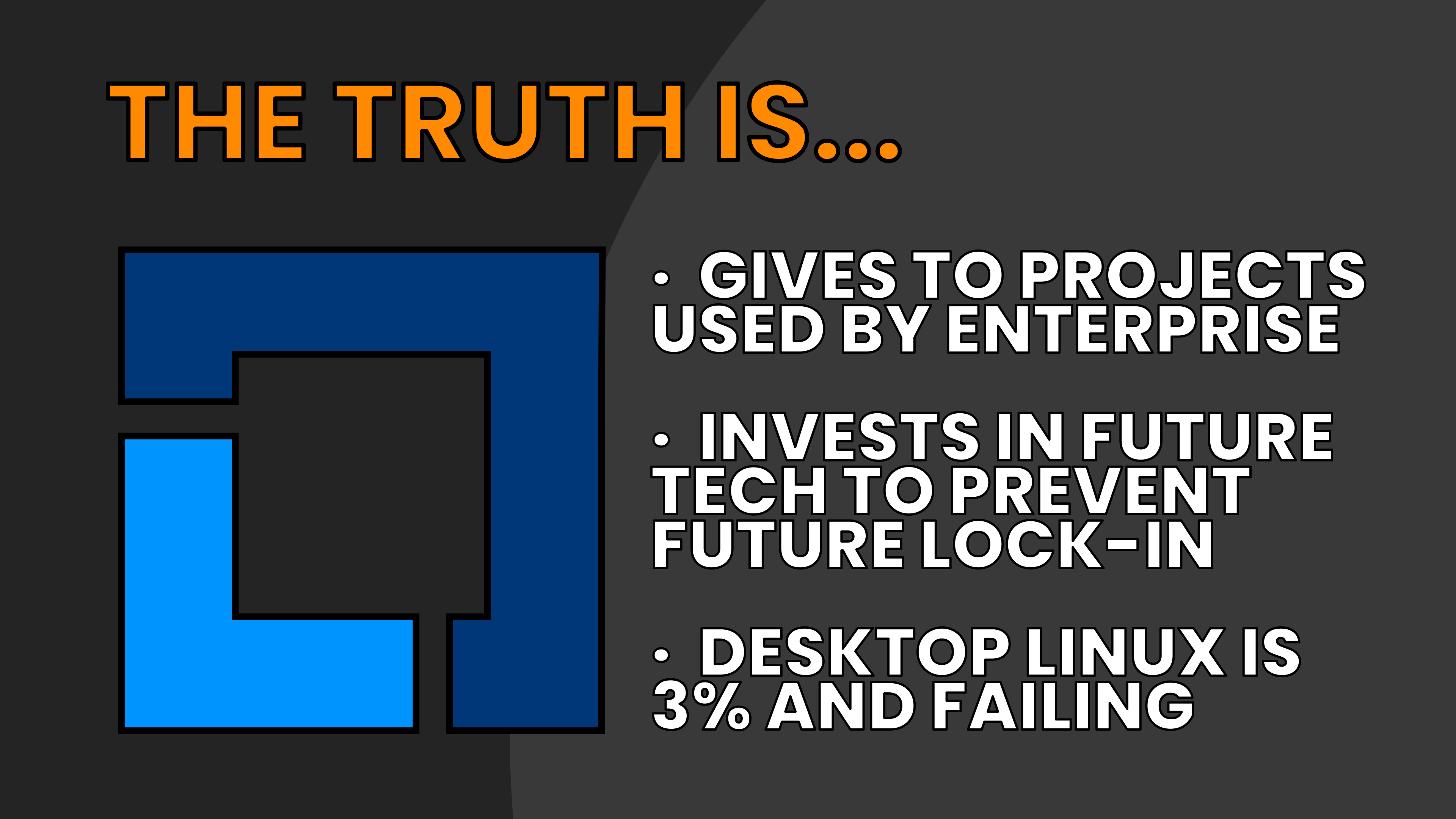
The Linux Foundation, as a non-profit 501(c)(6) lists in their bylaws:
The purposes of this corporation are to support, promote, protect and standardize Linux and other open source software and technologies.
The Linux Foundation Bylaws (Updated March 2024)
So as a non-profit, the Linux Foundation is serving its mission statement by protecting open source software like Chromium? I see nothing wrong here, sounds in-line with the mission statement.
Chromium is open source software, a reasonable argument could be made it’s a standard given how many projects use it, and the fund would protect Chromium in the event Google couldn’t develop it and give it neutral governance.
What’s the alternative?
Now imagine with me someone online says “How come you don’t give to the Mozilla Foundation? It’s only fair Mozilla gets some love as the dying web browser!” As much as I would like that, first let’s consider the Mozilla Foundation is also a non-profit organization and makes a good portion of income from the Mozilla royalties and expenses on software development of “fundamental technologies like web browsing and email.”
If you are curious about the difference between a 501(c)(3) and a 501(c)(6), the simplified version is the Linux Foundation is allowed to lobby for politics, the Mozilla Foundation is not.
While $18M is not a lot of their income, it’s significant enough that a tax regulator would have a second glance if the Linux Foundation were giving money to the Mozilla Foundation. Non-profits swapping money this way or through a fund could get negative attention of tax regulators and causes both the Linux and Mozilla Foundations to lose their non-profit status in a worst case scenario.
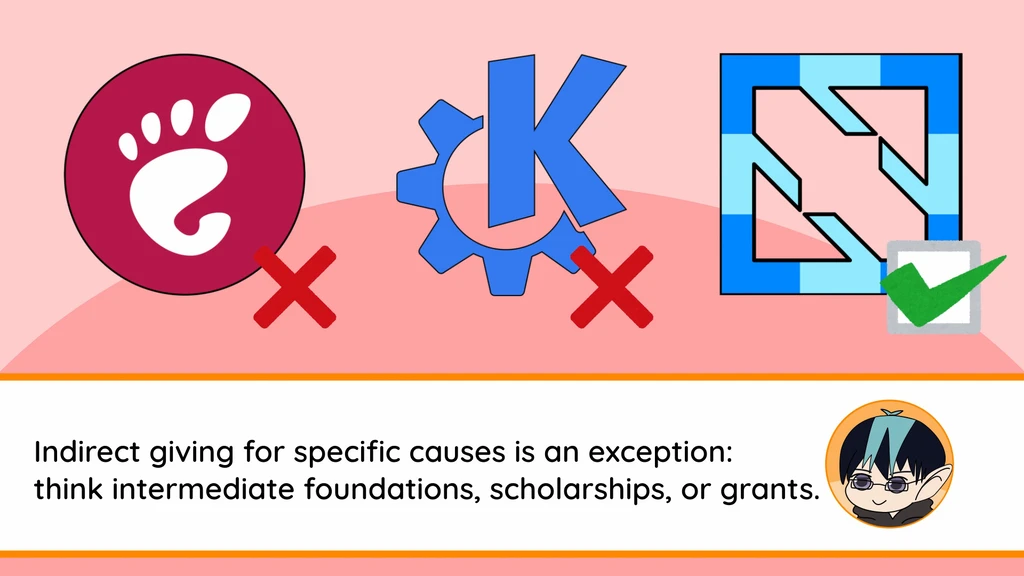
Non-profits are supposed to be spending their money, not giving it away. They can’t give money to the GNOME Foundation and the KDE e.V. for the same reasons. The Linux Foundation, when they spend money on a cause, they can’t do it when it would replace work in the organization they are giving money, because that organization needs to reciprocate and do the same.
There are also exceptions to this rule that I am not familiar enough with: things like scholarships or grant writing. There have also been cases where intermediate foundations do work for both parties. People are also needed to manage the funds appropriately, so it’s a lot of work.
Contrary to this, Chromium has no foundation support and the developers as well as Google have previously expressed they have no interest in opening a foundation for Chromium. Since there’s no foundation, the initiative is also open to other interested browser makers like Opera and Microsoft, not just Google. It’s not just these companies either because the fund is open to other Chromium interest groups/projects and can increase non-Google voices in Chromium. So what better to invest in an initiative like the Linux Foundation to support Chromium as the standard it has become?
Everyone is sure quiet…
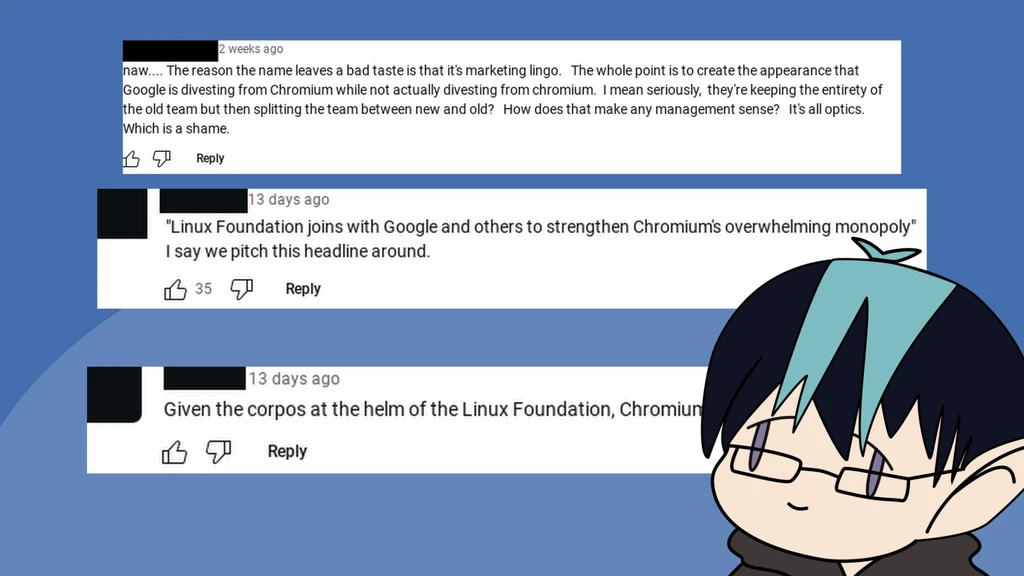
This of course brings up yet another argument from the “critics” of the Linux Foundation that claim Google is only doing this to look good. My rebuttal is Google is being awfully quiet about this if they intended this to look good. If Google wanted regulators to notice this, they would typically publish it on “The Keyword,” their blog.
For example, Google used “The Keyword” to dispute a ruling from the UK’s Competition and Markets Authority (CMA). In this way, the Linux Foundation differed, because they used their equivalent newsroom to make their announcement, but no notification via social media.
Similarly, if we look on Google’s X (formerly Twitter) account, news of the Supporters for Chromium Browsers Initiative are non-existent. If this is about Google trying to posture themselves as anything but a monopoly, kind of weird they aren’t talking about it.
This Was Never About Desktop Linux
The reality is what these “critics” just can’t stand the darling desktop Linux users just don’t matter compared to the server and embedded device Linux users by many orders of magnitude. The natural distrust of companies plays a big role in this, but this is an example of what desktop Linux users shouldn’t be.
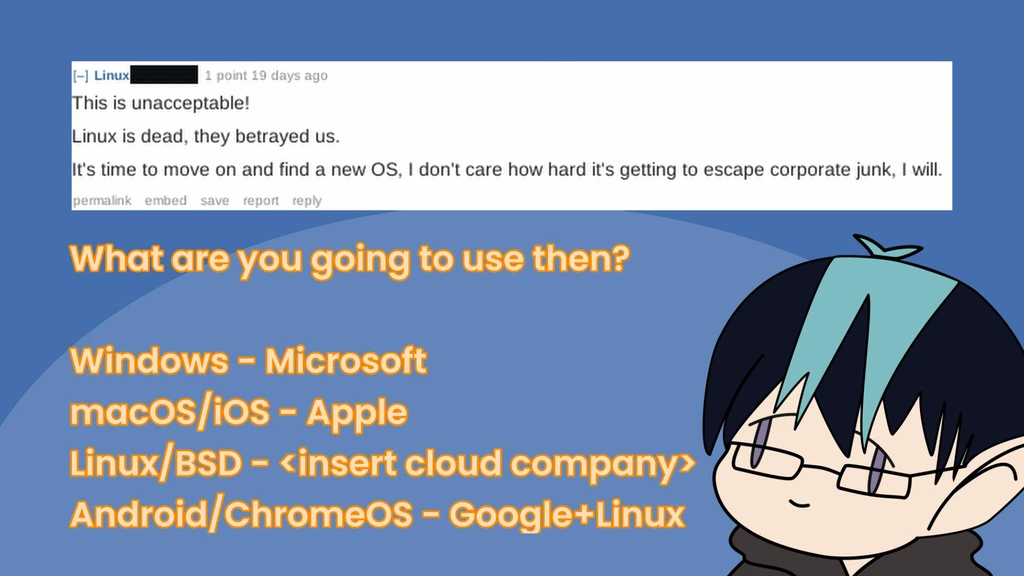
If desktop Linux users constantly beg the Linux Foundation to give to the Linux Foundation, yet criticize the Linux Foundation for using their spending and resources appropriately, I wouldn’t be giving money to them. More over, the Foundation can’t give money because of the complications of non-profit tax law in the United States (or overseas in the case of KDE e.V.).
I’m going to close with the wise words of a friend of the channel, who actually works for the Linux Foundation,
They’re going to tell you the same thing as everyone else. “Show me the money…” Make a better product.
Maybe when desktop Linux is actually a widely used, then there will be funding put in place for the open source desktop. Until then, keep on dreaming, start donating, and stop spreading these nonsense conspiracies.
Video Credits
- Open Source Summit 2024: A Hub of Innovation and Collaboration
- Trump, a populist president, is flanked by tech billionaires at his inauguration, Ali Swenson, Associated Press
- Google I/O 2024
- Watch Sundar Pichai, Google, and the AI Boom - Emily Chang et al, Bloomberg
- Google CEO Sundar Pichai questioned on tracking of users’ locations, CBS News (2018 hearing)
- WIRED25: Google CEO Sundar Pichai on Doing Business in China, Working with the Military, and More
- Bill Gates vs United States - Deposition
- Trump: DeepSeek’s cheap AI should be ‘wakeup call’ for US tech, Reuters
- Panel Discussion:Why a Universal Definition of ‘Open Source AI’ is Essential for Humanity
- Keynote: Linus Torvalds, Creator of Linux & Git, in Conversation with Dirk Hohndel
- Alphabet CEO Sundar Pichai on layoffs: Important to create capacity from within to invest for future